'Oh, That's Just AI!' So What?
Content made with AI help often gets waved off as 'just AI'. What deserves judging is the result: is it deceptive, was it refined, is it tidy or messy.

Ever posted something and gotten the comment "oh, that's just AI!" as if it were a verdict? The tone is usually the same: if you got caught using AI, you weren't sincere, you didn't try, or you don't deserve credit.
I use AI to help with a lot of my own work, and I almost always edit the result before using it. That got me thinking: whether or not AI was used, what deserves judging is the result. Some criticism is valid, but often what gets targeted isn't the right thing.
The stigma is real, and it has a cost
This isn't just a feeling. Schilke and Reimann's study in Organizational Behavior and Human Decision Processes (2025) ran thirteen experiments and found, consistently, that people who disclose using AI are trusted less than those who don't. Interestingly, that effect was weaker than when the AI use is exposed by someone else. So disclosing has a price, but being exposed by someone else costs more.
The same thing shows up with profile photos. In a Ringover survey of 1,087 recruiters (June 2024), 76.5% actually preferred AI headshots in a blind comparison, yet 66% said their view turned negative once they knew the photo was AI-generated. The details are in Making a LinkedIn Profile Photo With AI: 5 Prompts That Worked First Try. In other words, what makes people judge it badly often isn't the quality, it's the label.
Guessing "that's definitely AI" is often wrong
People who toss out that comment are usually sure they can tell. A Pew Research Center survey (June 2025, 5,023 U.S. adults) found that 76% consider it extremely or very important to be able to tell whether pictures, videos, and text were made by AI or by people, but 53% are not too or not at all confident they can do it.
Detection tools aren't reliable either. OpenAI itself shut down its AI text classifier on July 20, 2023 because of its low accuracy. In OpenAI's own evaluation on a challenge set of English texts, the tool correctly identified only 26% of AI-written text, while wrongly labeling 9% of human-written text as AI-written. OpenAI also wrote that it should not be used as a primary decision-making tool.
Worse, a Stanford study published in Patterns (2023) found that detectors often wrongly accuse non-native writers. According to a ScienceDaily summary, of 91 TOEFL (English proficiency test) essays by non-native English speakers, the detectors tested wrongly labeled more than half as AI-generated, and one detector flagged nearly 98%. By contrast, more than 90% of essays by U.S. eighth-graders were recognized as human-written. So an accusation of "that's AI" is often just a guess, and the one hurt can be someone who wrote honestly in a second language.
Whether it's AI or not, what deserves criticism is the result
I think the question isn't "is this AI or not?", it's "how is the result?". Criticism is valid when the result has one of these three problems, whether it was made by AI, by a person, or by both:
- Deceptive. Fake testimonials, invented personal experiences, realistic images of people or events that never existed, and the like. The problem is the deception, not the tool.
- No refinement. Facts nobody checked, made-up quotes or sources, sentences nobody reread. Raw output thrown straight out. What's published under your name is your responsibility, no matter who typed it.
- Messy. The flow jumps around, the style is inconsistent, the content circles without a point of view or examples. The result gives the impression of generic output.
The last two are what usually make people reflexively say "that's just AI". What bothers them isn't really the tool, it's the generic feel of something nobody touched.
If a result has none of those three problems, there's nothing to take issue with in the tool that was used. And the reverse holds too: a human-written piece that's deceptive, unchecked, or messy still deserves criticism.
People who use AI seriously almost always change it
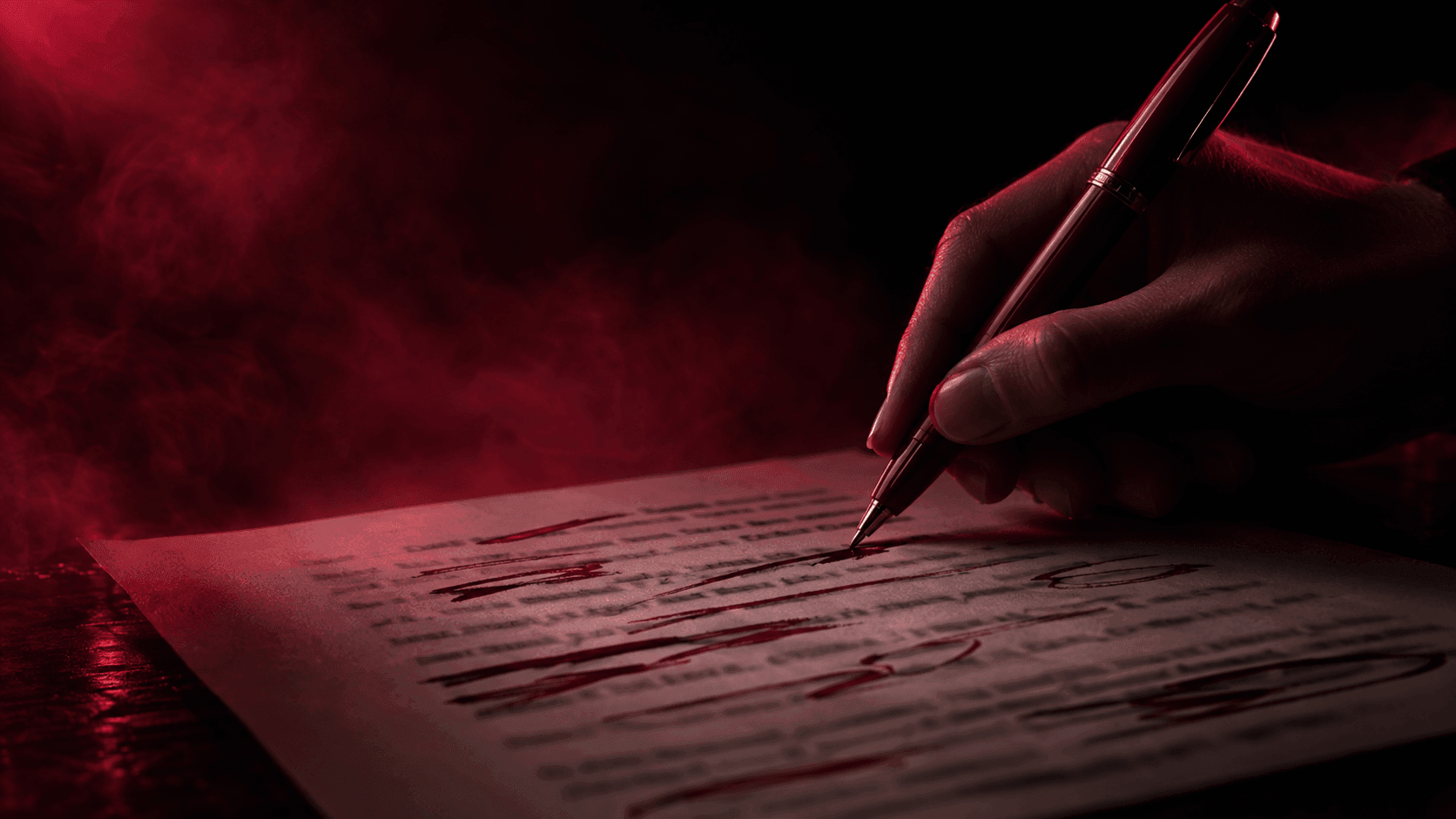
An AI draft is raw material. The flow I often see (and use myself): you set the message, the audience, and the angle, hand over your real facts or experience, the AI makes a draft, then you cut the clichés, swap in specific examples, check the facts, and adjust the tone until it sounds like you. How to give the AI a clear direction is covered in How to Prompt AI in 2026, To the Point.
The difference shows in the final result, as in the example below.
An AI draft left raw
- Opens with a generic line like 'In today's fast-paced digital era...'
- Big claims with no examples, numbers, or sources
- Flat tone, no point of view, no personal experience
After adjusting
- Opens with a specific situation you actually went through
- Claims backed by examples, numbers, or sources that were checked
- Wording adjusted to how you normally talk
When to say you used AI
The key isn't "always" or "never", it's whether your audience is making decisions based on the assumption that it's authentic. Three questions I use:
- Is this really the message you want to convey? If yes, and you're the one steering it, the tool is secondary.
- Have you read it, edited it, and checked the facts? If not, don't publish it.
- If readers knew the process, would they feel deceived? If yes, say so. If not, no need to make a fuss.
Clear examples that need openness: testimonials and reviews, personal experience stories, realistic images of real people or events, credentials and academic work. YouTube's guidance on synthetic content can serve as a reference. YouTube requires disclosure when AI makes a real person appear to say or do something they never did, alters footage of a real event or place, or creates a realistic scene that never happened. On the other hand, YouTube doesn't require disclosure for production assistance such as creating or improving outlines, scripts, thumbnails, titles, or infographics, nor for content that is clearly unrealistic.
OpenAI also forbids presenting output as human-generated when it wasn't, in its Terms of Use. On this site, when an article's cover is a realistic AI-made photo, I put a note at the end of the article. For who owns the output, see Who Actually Owns Content Made by AI?
If you're the one getting the "that's AI" comment
- No need to get defensive. If you decided the message and edited the result, answer calmly and steer back to the substance.
- If it helps, describe the process. You set the direction, you edited the result, you checked the facts. That's more convincing than denying it.
- If what's criticized is the result (wrong facts, generic, messy), fix it. That's valid criticism, whatever the tool.
- Don't rely on AI detectors to prove yourself or to accuse others. The data above shows why.
And if you're the one about to comment: criticize the result (deceptive, unrefined, messy), not the tool.
Wrapping up
Whatever tool is used, what gets judged in the end is the same: the result. Honest or deceptive, refined or thrown out raw, tidy or messy. If all three check out, "that's just AI" is no longer a criticism, just a note about how the work was done.
If you're thinking about how to use AI in a team or brand without losing your voice and trust, tell me about your situation first.
Is your team still doing something by hand?
Tell me about it, and let's find the fix together.
More notes

Can AI Learn Your Sales Style From WhatsApp Chat History?
Yes, and you usually don't need to train your own model. How to export WhatsApp chats, turn them into a style guide, a ready-to-use prompt, and the customer data risks.
Read the note
Gemini vs ChatGPT for Office Work, Which One Fits Better?
Gemini and ChatGPT can both be used for work, but their strengths differ. A plan price comparison in Rupiah, which suits teams on Google Workspace, and when ChatGPT makes more sense.
Read the note